
Process over Product (Pt. I)
How finding the day-to-day process you enjoy the most leads to a sustainable art practice.

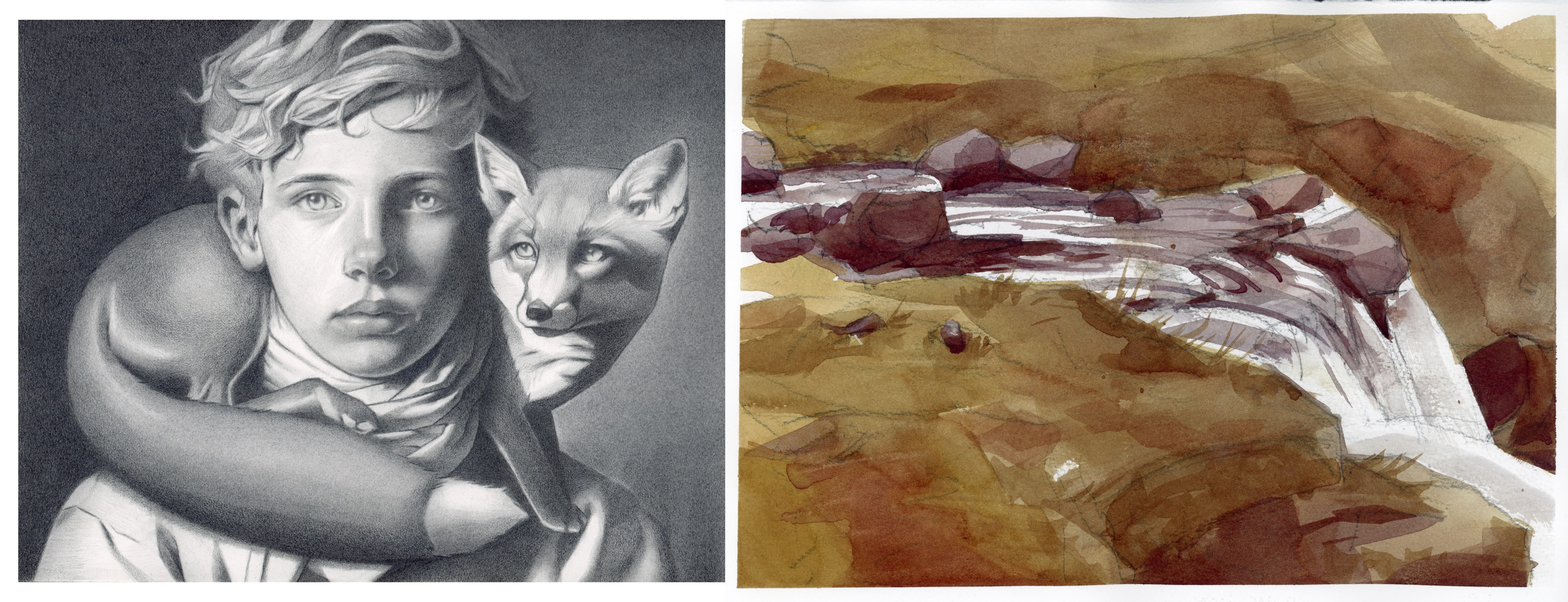
Hi friends 👋,
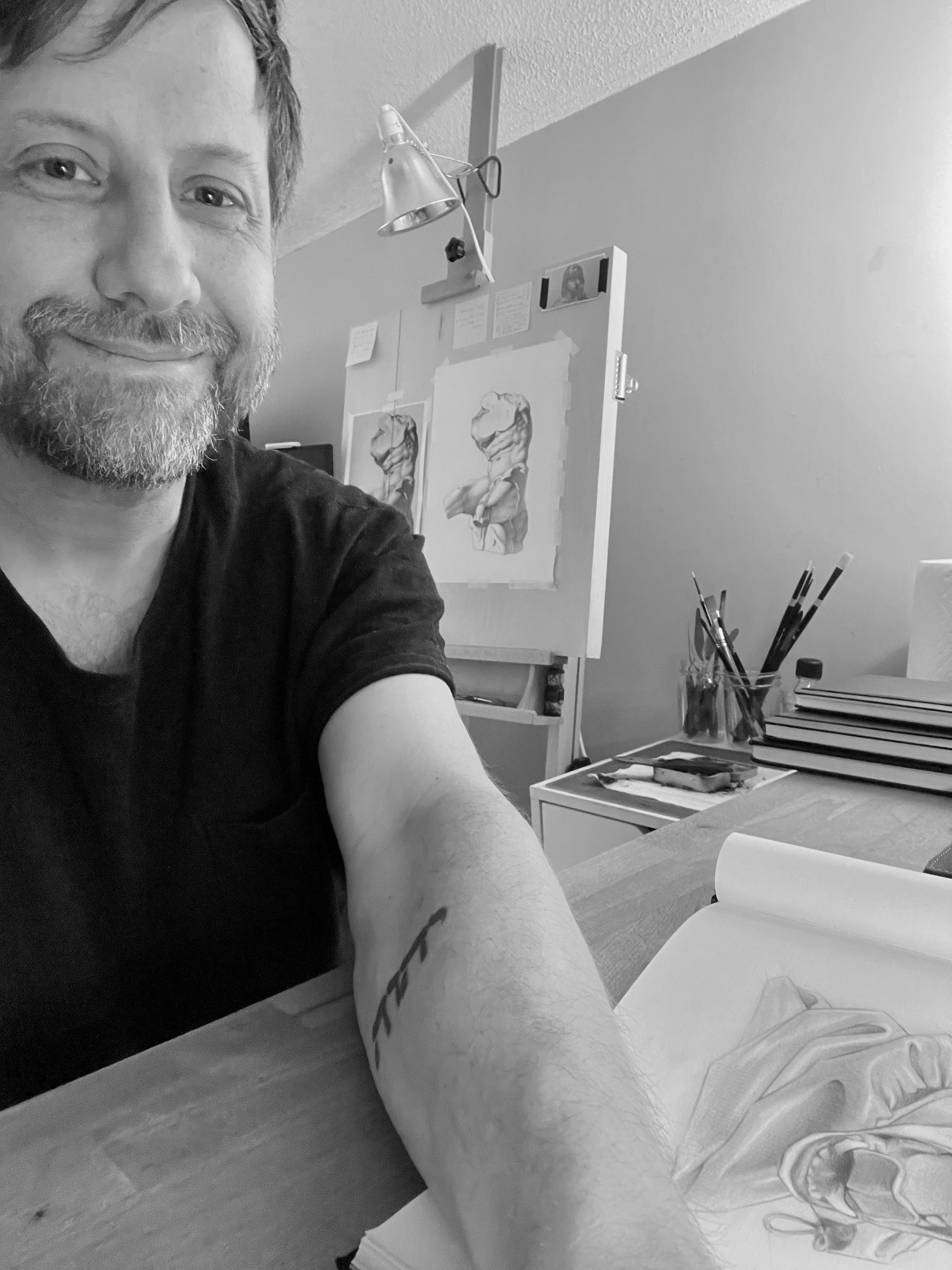
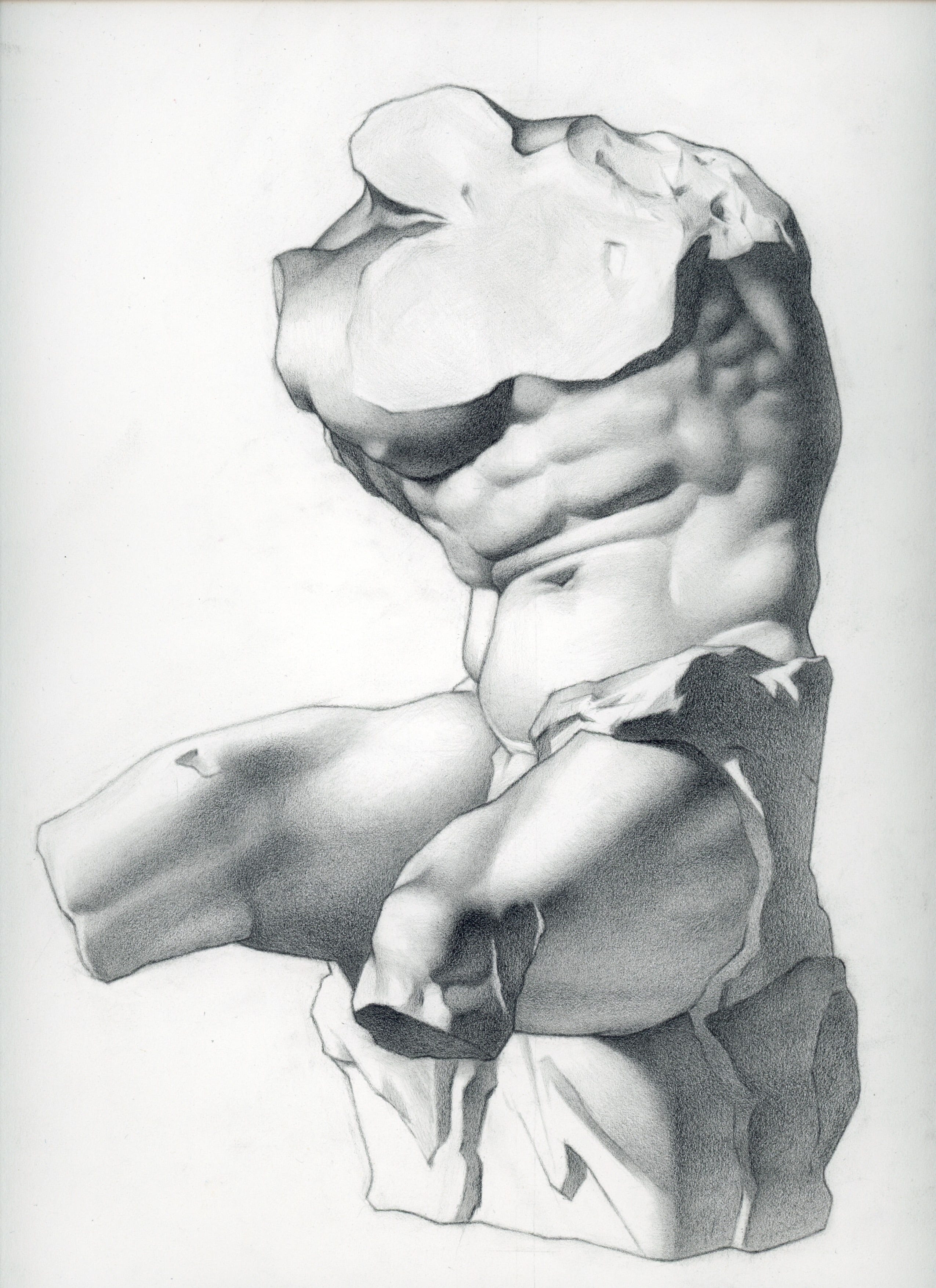
A few years ago, my artwork centered around highly rendered graphite drawings using a traditional atelier approach. I wasn’t a true atelier student by any means - my somewhat “cartoonish” influences never disappeared entirely - but I’d borrowed my technique from the tradition, spending 2-3 years learning how to block-in, slowly build up, and execute a drawing using the same process as the old masters. I did my own Bargue copies at home (rite of passage for atelier students everywhere), drew vertically on a full-sized easel, and read Harold Speed’s treatise on drawing, cover-to-cover, multiple times. I was a devotee.
On one hand, this approach to drawing is a great fundamental art education. It has worked for artists for centuries and still continues to do so. It’s an approach that focuses on building skills in a way that is very structured and logical. Anyone can do it, if you’re willing to put in a little (ok, sometimes a lot) of elbow grease.
It’s also great for getting impressive results in a short period of time. I went from rediscovering my childhood love of drawing in 2021 to some really flattering recognition online by 2024, a type of traction I’d never really experienced before.
Before long, however, I started to see some problems with the academic tradition in relation to where I wanted to go.
This article is about what led me to begin steering in a different direction during the foundations of my artistic journey, and why I’d encourage you to place more value on the happiness you get from your process, rather than the end result.
Return on Investment
After an initial learning period, I started producing finished drawings, many of which kept getting more complicated and, therefore, more demanding. After a couple years, as my job got busier and my drawings were taking longer and longer, I realized it might be, I don’t know - good? to actually consider selling some of my work, to at least help justify the investment I was making in time.
Pretty quickly, I learned that I just didn’t feel I could charge what it would take to make it both fair to the buyer and fair to myself, by my own assessment. I certainly didn’t want to punish a buyer just because something is time-consuming to make, especially in a medium like graphite, which is relatively low in materials investment compared to, say, an oil painting.
But I also felt like nothing I could charge with kindness to the buyer in mind would really be all that fair to myself, either.
So I just said no. To every single person that ever inquired about buying a drawing. I traded a piece or two with other artist friends for works of their own, but turned down sales otherwise. The simplicity of keeping numbers out of my art’s worth altogether made me happier than a few extra bucks.
Especially in this day and age, choosing one of the slowest mediums and then trying to create enough work to post content and sell seemed like a recipe for bitterness, unless I was absolutely in love with the process.
Was I? No.
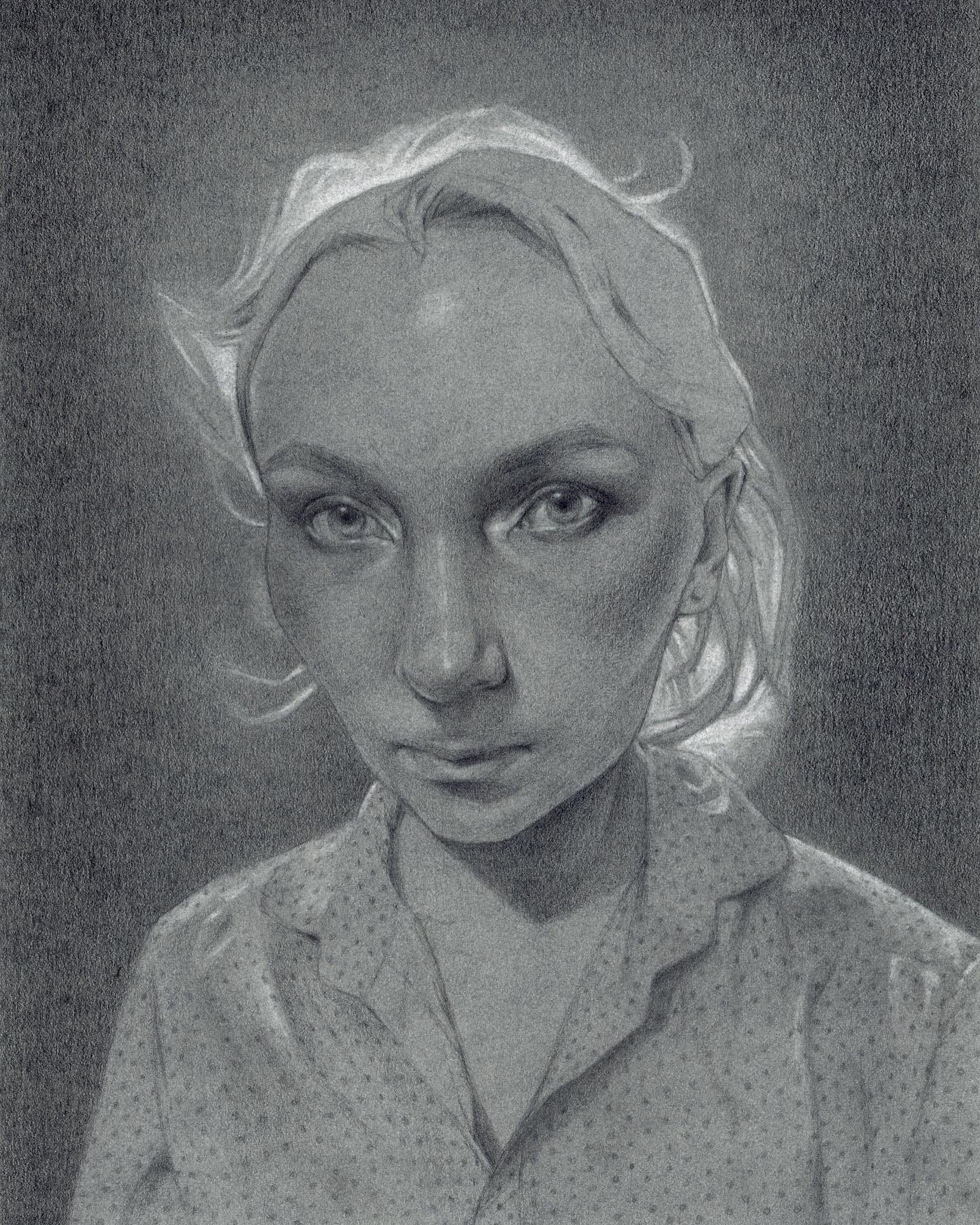
After a good number of these graphite drawings, I noticed that each one kept getting more complex, more time consuming, and more perfect - but I was getting burnt out halfway through the process more frequently. The same teacher I’d had that said ten drawings a month would be very high had also called drawing a “cold passion.” Was this what I wanted?
This led me on a quest to really dig deep and inquire within myself which process I enjoyed the most.
Different Kinds of Depth
But I was still spending a lot of time making these drawings, and where was it taking me? There’s nothing wrong with taking a long time to make a single piece of art. In fact, most really good pieces are made this way. I’ve even said before, “How can you expect the audience to spend a lot of time with your art if you haven’t spent much time making it? Depth rewards depth.”
I still think this is true, but now I’ve realized there are different types of depth. Which type you go for is a personal choice.
You’ve probably heard the Chinese fable about the king who commissioned an artist to paint a rooster. Forgive any imperfections in my recollection, but it goes something like this:
A great King (who apparently had a thing for roosters) commissions an artist to to paint a portrait of one, but the artist has an unusual request: he needs three years to do it. Reluctant, but aware the artist was regarded as the best in the land, the King concedes.
Three years pass and the King calls the artist to his courtroom, demanding, “Where is my rooster?!”
Calmly, the artist turns to a blank sheet of paper and in three minutes, proceeds to paint the most beautiful, lifelike rooster in paint that the King has ever seen.
The king was even more furious now: “If you could paint it so quickly,” he asked, “why did you make me wait all this time??”
The artist then led the king to a large house at the back of the palace, where, within, thousands of sketches, notes, and diagrams of roosters are stacked to the ceiling. The artist then explains to the King that while it may have taken three minutes to paint the rooster, it took three years to learn how to paint it in three minutes.
There is a kind of depth that comes from laboring over a single work for weeks or months, refining every edge and slowly building toward completion. But there is another kind of depth that comes from mileage - from years of accumulated observation, repetition, experimentation, failure, and practice.
One form of depth is visible in the artifact itself. The other is stored invisibly inside the artist.
Mileage versus Refinement
I remember kind of sitting up in my seat the first time I heard my teacher refer to “making ten drawings a month” as an example of exceptionally large output. We weren’t talking sketches here anymore - these were Drawings with a capital “D.”
This approach to drawing has a lot to offer in terms of building discipline, stamina, and sharp observational skills, but I found there was one inherent problem: it trades mileage for refinement.
You’ve probably heard it said that it’s better to paint ten small paintings in a month than one giant one. The argument goes something like this:
Each painting presents the artist with a unique set of problems to solve.
Therefore, we gain more experience by painting ten paintings than we do with one, as this requires us to solve more sets of problems, regardless of size.
Experiencing the entire process frequently also builds more comfort with two of the most challenging parts of the artistic process: starts and finishes.
Over years of countless sketches, thousands of piles of drawings, scrawls, and notations - many of which look more like chicken scratch by themselves - one may eventually find that, when it comes time to execute a drawing, it’s done in three minutes but contains a lifetime of mileage behind it.
What I’ve come to understand about art is that there is no single realm (whether that be approach, technique, or school of thought) that contains every answer. Art, like life, is more like a series of branching paths than a bullet train on rails. If you’ve made camp at a roadside destination along the way, great! But there’s plenty more to see.
I also don’t regret academic drawing at all. In many ways, it gave me the very foundation necessary to eventually begin asking these questions in the first place. The structure, discipline, observational training, and deep concentration muscles are all invaluable gifts. I still believe strongly in fundamentals.
But foundations are meant to support a house, not become the entire house itself, right?
Conclusion
Just this week, a young artist on Instagram sent me a message expressing how much my graphite drawings meant to them and whether I had any tutorials about making drawings that way. And nowadays, I have to stop and consider a bit harder before I reply with my recommendations.
Each person is on their own path, and for some, academic drawing is absolutely the right way to go. I don’t regret my foundation in it at all, either. In fact, I’m sure the truths I discovered there will become useful to me once again in a kind of synthesis, whenever I’m ready.
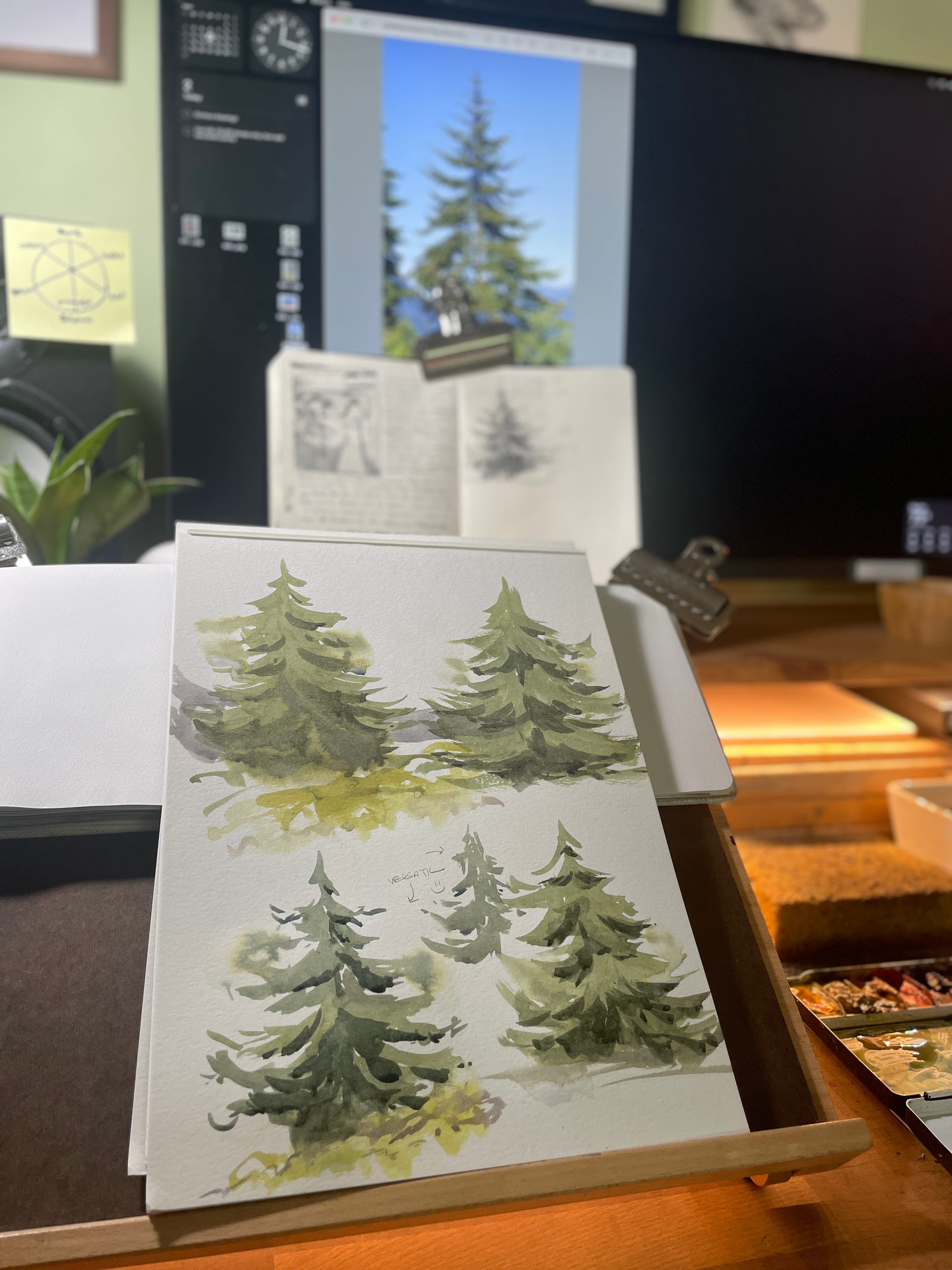
But I’m personally on a path to discover my own voice, and I’ve sacrificed something for this. That is the immediate rewards and recognition of drawing in a way which takes twenty hours but produces an impressive result, for a much less predictable and impressive in the short term - series of attempts at daily mileage, joy, and discovery.
My past experience in music has made this choice feel clearer, even when it is not easy. I’ve learned what it looks like to slowly drift away from the original thing you loved, while still becoming increasingly “good” at the system built around it.
My art today may look “worse” than it did a few years ago, but let me tell you this: I wake up every day thrilled to get back into it.
And this, I believe, is what will sustain me for a long-term practice that eventually gets me where I want to go.
There’s a certain bravery required in leaving behind a path with obvious markers for one that feels less defined. Especially when the new path produces fewer immediate rewards. Mileage sure seems to be a lot messier than refinement. Just as voice is slower than imitation, and discovery is harder to measure than polish.
I think it’s going to take me much, much longer to get where I’m going this way in drawing and painting. But I know now from experience that when I arrive this time, I’ll arrive with my freedom intact.
Hey Kev, wonderful clarity in capturing your thoughts.
Totally agree. When I feel like I’ve got the basic structure of the house figured out, I move on to the interior (my voice), but it’s hard because it rarely turns out the way I picture it in my head—very interesting but difficult, so when the reward comes, it will be greater
I can relate to this so much. I have also found myself laboring away at something only to realize I am not really enjoying it. Trying hard to listen to myself more, maybe that’s the lesson in all of this. Also, voice IS slower than imitation…so slow that I almost feel like I can’t say voice out loud or it will run away from me😂 What a great perspective, great read, thank you for sharing!